
Context
Limak Yenilenebilir Enerji A.Ş. is a fully renewable-based energy company in Türkiye with 51-250 employees and a generation portfolio made up entirely of renewable assets.
Before this initiative the company financed its renewable investments mainly through conventional loan mechanisms. This concentrated funding in a narrow set of sources and tied the pace of new capacity to bank lending capacity. The issuance represented a transformation in the company's financing strategy, diversifying its funding sources beyond conventional bank lending and creating direct access to international sustainable capital markets. Reaching international investors required a financing model that was transparent, measurable and aligned with international standards.
The commercial stakes are direct. Diversifying funding sources and securing competitive terms determines whether new plants can be built at scale, while macroeconomic volatility, the global interest rate environment and evolving sustainable finance standards remain the main risks to financing conditions.
Location of the initiative: Türkiye; bond issued on international capital markets
Solution
In February 2025 the company completed an international green bond issuance of USD 525 million. Investor demand exceeded USD 1.25 billion, supporting pricing on competitive terms. The proceeds are dedicated to new renewable generation projects that meet defined green eligibility criteria, set out in a Green Bond Framework aligned with the Green Bond Principles (GBP) published by the International Capital Market Association (ICMA).
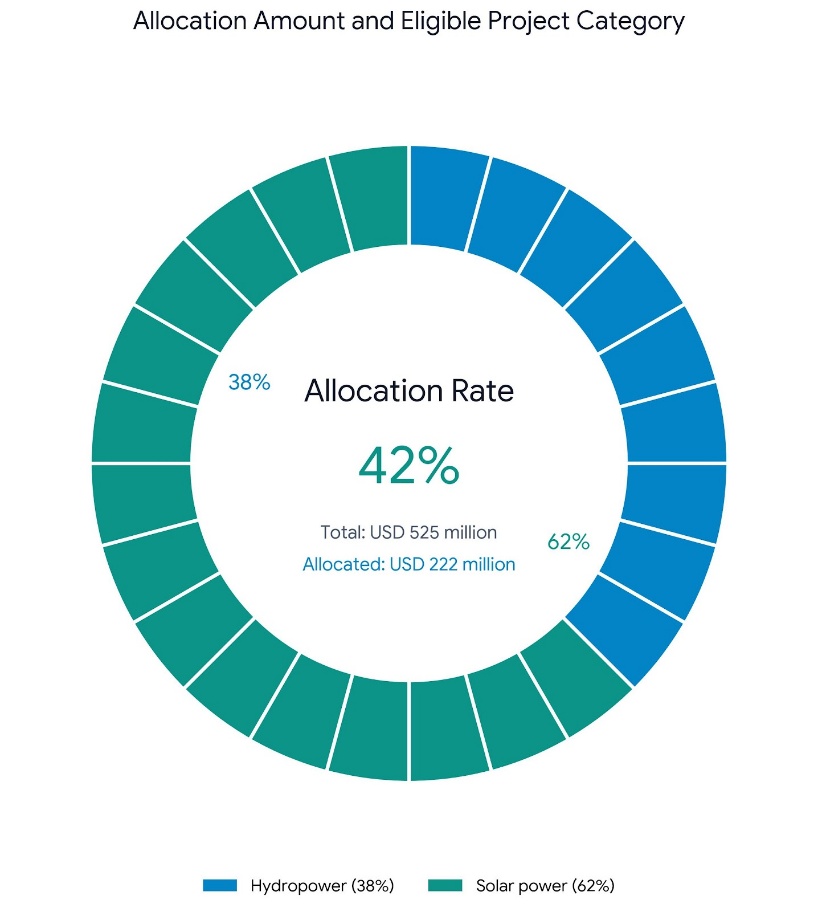
By 2025 the company had allocated USD 222 million to eligible green projects, an allocation rate of 42% (1). Upon full allocation of the USD 525 million proceeds, the issuance will support a total increase of 476 MWe of installed capacity in the portfolio, combined with optimisation of existing basin management to give a more balanced generation regime with higher availability.
The assets financed to date are:
-
a 100 MWe solar plant, in its first year of operation; and
-
a 120 MWe hydropower plant, under construction and expected to be commissioned in 2027.
Allocation of the proceeds is governed by a Green Finance Committee, and the environmental and social results of the funded assets are reported to investors each year.
Figure 1: The eligibility criteria for hydropower and solar projects under the Green Bond Framework, the UN Sustainable Development Goals they contribute to, and the key performance indicators reported for each financed asset.
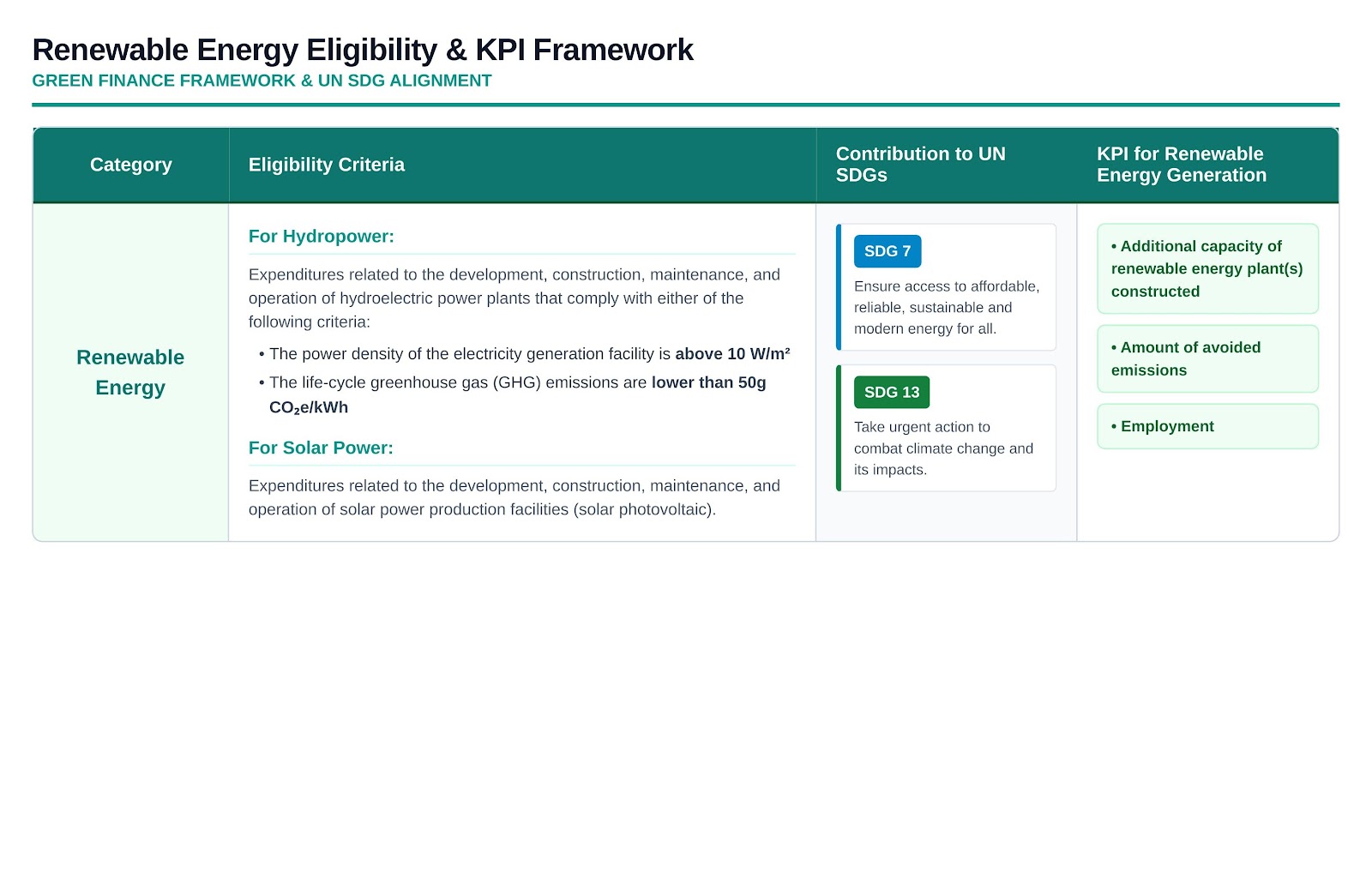
Figure 2: Allocation of the USD 525 million issuance as at 2025: USD 222 million, or 42% of proceeds, allocated to eligible projects, of which 62% went to solar power and 38% to hydropower.
Impact
Sustainability Impact
Climate
This initiative is an enabler with indirect impact. The issuance is a financing measure rather than a direct abatement measure and does not reduce the company's own operational emissions; its climate effect arises through the assets it finances. Those assets are renewable generation plants held in the company's own portfolio: their construction falls under Scope 3, Category 2: Capital goods, while their operating effect is felt in the electricity system, as generation that displaces grid supply and is therefore recorded as avoided emissions outside the corporate inventory rather than as a reduction in the company's own Scope 1 and Scope 2 emissions.
Avoided emissions are calculated for each financed asset by multiplying the expected annual generation stated in the plant's electricity generation licence by the Türkiye national grid emission factor. On this basis, the 100 MWe solar plant is estimated to avoid 151,269.52 tCO2e a year, and the 120 MWe hydropower plant is expected to avoid 168,562.45 tCO2e a year once it is commissioned in 2027 (1).
Avoided emissions, newly added installed capacity and the allocation rate are tracked as annual key performance indicators and disclosed to investors in the Allocation and Impact Reports.
In addition to this impact, renewable energy investors are encouraged to undertake projects with a lower footprint by adhering to established green criteria. Meeting these green investment benchmarks enables effective environmental impact management by keeping project emissions or energy intensities within designated thresholds.
Social
Employment created by the financed projects is measured at the project location and in neighbouring cities. Figures are consolidated to cover people employed directly by the company as well as those employed by main subcontractors and contractors, and are reported transparently.
As of 2025 the financed projects had created 427 local jobs within total employment of 669 people (1). Local and total employment are tracked as standing indicators alongside capacity added and emissions avoided.
Business Impact
Benefits
The issuance changed the company's funding structure. Sustainable finance moved from a marginal position to a significant share of total financing, reducing dependence on conventional lending. Demand of more than USD 1.25 billion against a USD 525 million issue supported competitive pricing and showed that renewable assets can attract international capital on favourable terms.
Measuring, monitoring and regularly disclosing the environmental and social effects of investments became an established corporate practice rather than a one-off exercise. An independent second party opinion, sustainability ratings and independent limited assurance on the annual reports strengthen the credibility of the reported metrics and reduce exposure to allegations of misleading sustainability claims.
Investor relations were also restructured. Quarterly investor meetings, published investor presentations, one-to-one meetings, question-and-answer sessions and annual allocation and impact reporting operate as a continuous mechanism, supporting longer-term relationships with international investors.
According to the company, the transaction achieved the lowest yield among international bond issuances in Türkiye's energy sector since 2021, demonstrating that the green structure was recognised by investors not only as a sustainability feature but also as a financially attractive proposition.
Costs
The company does not disclose transaction cost figures. The recurring cost drivers are the requirements of the framework itself: an independent second party opinion, sustainability ratings, annual allocation and impact reporting, independent limited assurance, and the internal time of the finance and sustainability teams and of the Green Finance Committee.
Proceeds may only be used for projects meeting the eligibility criteria, which reduces financial flexibility. To keep the instrument revolving, cash flows from the issuance and the returns from the financed investments are blocked and reserved for new green projects. Financing terms remain exposed to macroeconomic volatility, the global interest rate environment and possible changes in sustainable finance standards.
Impact Beyond Sustainability And Business
Co-benefits
The issuance had effects beyond the company. It gave other energy companies a concrete reference for reaching international markets, and added to the use of sustainable finance instruments in Türkiye's capital markets. Demand for compliance with green criteria also extended into the value chain: main equipment suppliers and construction contractors reviewed their design, installation, commissioning and operation processes to meet those criteria.
Potential Side-effects
The main risks identified are macroeconomic volatility, the global interest rate environment and possible changes in the standards on which the framework relies. The risk of misrepresentation regarding sustainability claims is managed by having the framework verified by independent parties at the access, allocation and impact stages, which raises the level of transparency required from issuer and investors alike.
Implementation
Typical Business Profile
The model is most relevant to capital-intensive companies with an identifiable pipeline of low-carbon assets, including power generation, utilities, infrastructure and heavy industry, and to issuers in emerging markets seeking international investors. It requires finance and sustainability functions able to work together, a project pool that meets defined eligibility criteria, and the reporting capability to measure and disclose impact annually. Scale is set by the size of the eligible asset pipeline rather than by company headcount.
Approach
-
Establish executive ownership: Position the issuance as a strategic priority owned by the Board of Directors and senior management at Chief Executive Officer (CEO) and Chief Financial Officer (CFO) level, and integrate it with risk management, budget planning and operational decisions.
-
Build the framework: Align a green bond framework with the ICMA Green Bond Principles, defining green project selection criteria, the use-of-proceeds mechanism, the management of proceeds and the reporting cycle.
-
Obtain independent verification: Commission a second party opinion on the framework and engage sustainability rating agencies, so that eligibility and impact claims are verified by third parties at the access, allocation and impact stages.
-
Assemble the eligible project pool: Identify projects covering the 36 months before the issuance date, so that allocation can begin against assets that already meet the criteria.
-
Establish a green finance committee: Give a committee led by the CFO responsibility for meeting at least once a year, assessing the technical eligibility of candidate projects and managing allocation of the proceeds.
-
Engage investors continuously: Hold quarterly meetings, publish investor presentations, run one-to-one meetings and question-and-answer sessions, and feed investor expectations back into the framework.
-
Fix the impact method: Calculate avoided emissions from licensed expected annual generation multiplied by the national grid emission factor, alongside added installed capacity and local and total employment, and publish the results annually in an allocation and impact report carrying independent limited assurance.
-
Recycle the proceeds: Block and reserve the cash flows from the issuance and the returns from the financed investments for new green projects, so that the financing source continues beyond the first allocation cycle.
Stakeholders Involved
-
Project leads: The Board of Directors and senior management at CEO and CFO level owned the issuance, setting the eligibility criteria and approving the framework before it went to market. Day-to-day management of proceeds sits with the Green Finance Committee, led by the CFO, which brings finance, sustainability and technical staff together to rule on each candidate project.
-
Company functions: Finance and sustainability teams coordinated the process under a cross-disciplinary governance model, with in-house technical experts assessing project eligibility. Management of proceeds and impact reporting were integrated into standard corporate processes.
-
Main providers: International financial institutions supported the issuance and the company's access to international investors. An independent second party opinion provider reviewed the framework before issuance, sustainability rating agencies assessed the company's environmental, social and governance performance, and an independent assurance provider gave limited assurance on the annual allocation and impact reporting, so that the framework, the allocation and the reported impact were each verified outside the company.
-
Other: Investors shaped the financial, environmental, social and governance structure of the framework through feedback mechanisms. Main equipment suppliers and construction contractors adjusted their processes to meet the green criteria applied to financed projects.
Key Parameters To Consider
Green bonds are an established instrument; the technical requirement is a framework aligned with the ICMA Green Bond Principles and an eligible asset pipeline. The bond was issued in February 2025 with a 36-month look-back period for eligible projects; allocation and impact are reported annually. One financed hydropower plant is expected to be commissioned in 2027 and another is expected to start construction in 2027, while the solar power plant is in operation.
Impact calculation depends on the national grid emission factor and on the generation volumes stated in plant licences. Pricing depends on macroeconomic conditions and the global interest rate environment, and framework design depends on evolving sustainable finance standards.
Implementation And Operations Tips
The main challenge is credibility. Independent verification at each stage, covering the framework, the allocation and the impact, was used to keep the instrument clear of concerns about misrepresentation of sustainability claims and to give investors comparable data. Defining the eligibility criteria and the use-of-proceeds mechanism precisely before issuance avoided disputes at the allocation stage.
Wider adoption is supported by developing sustainable finance frameworks, rising investor awareness and closer collaboration with international institutions; peer learning among energy companies is already moving other issuers towards similar instruments.