Context
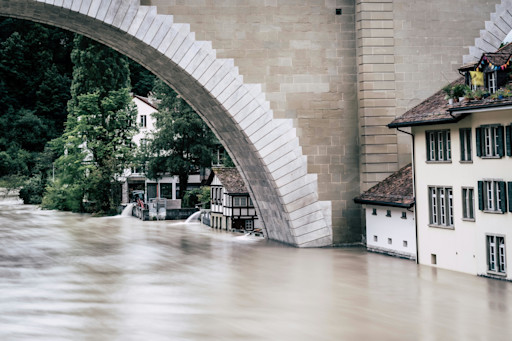
Flooding is the most frequent and costly natural hazard globally. As climate change accelerates, the frequency and severity of floods are rising, with heavy rainfall, sea level rise, and land-use changes compounding the risks. According to the United Nations’ 2025 Global Assessment Report, annual global flood losses now exceed USD $38 billion, while in the UK, damages reach an estimated £2.7 billion in a ‘floody’ year. Beyond the physical destruction of residential properties, floods disproportionally affect commercial businesses by disrupting critical infrastructure, supply chains, and business continuity.
These escalating risks are particularly visible in North-West England, a region defined by its exposure to floods, dense river networks, and rapidly changing weather. United Utilities, a UK-based water company that supplies drinking water and wastewater services to over 7 million people and 200,000 businesses across the region, has seen first-hand how flooding threatens both communities and operational assets. The company manages 56,000 hectares of land (much of it in upland catchments) and faces the challenge of ensuring reliable services while adapting to climate change-induced changes in rainfall and runoff. Recent storms have underscored the scale of this challenge. During storms Desmond and Eva in 2015, United Utilities’ water and wastewater treatment facilities sustained damages exceeding £40 million, with key sites such as Carlisle and Kendal wastewater treatment facilities severely affected. Following Storms Desmond and Eva insurance costs increased for the equivalent level of cover. Accordingly, and to ensure that insurance costs represent value for money to customers, a greater level of risk has been accepted by the company in the form of higher deductibles. The result is that the company would be required to absorb more of the costs of a flooding event like Storm Desmond in the future.
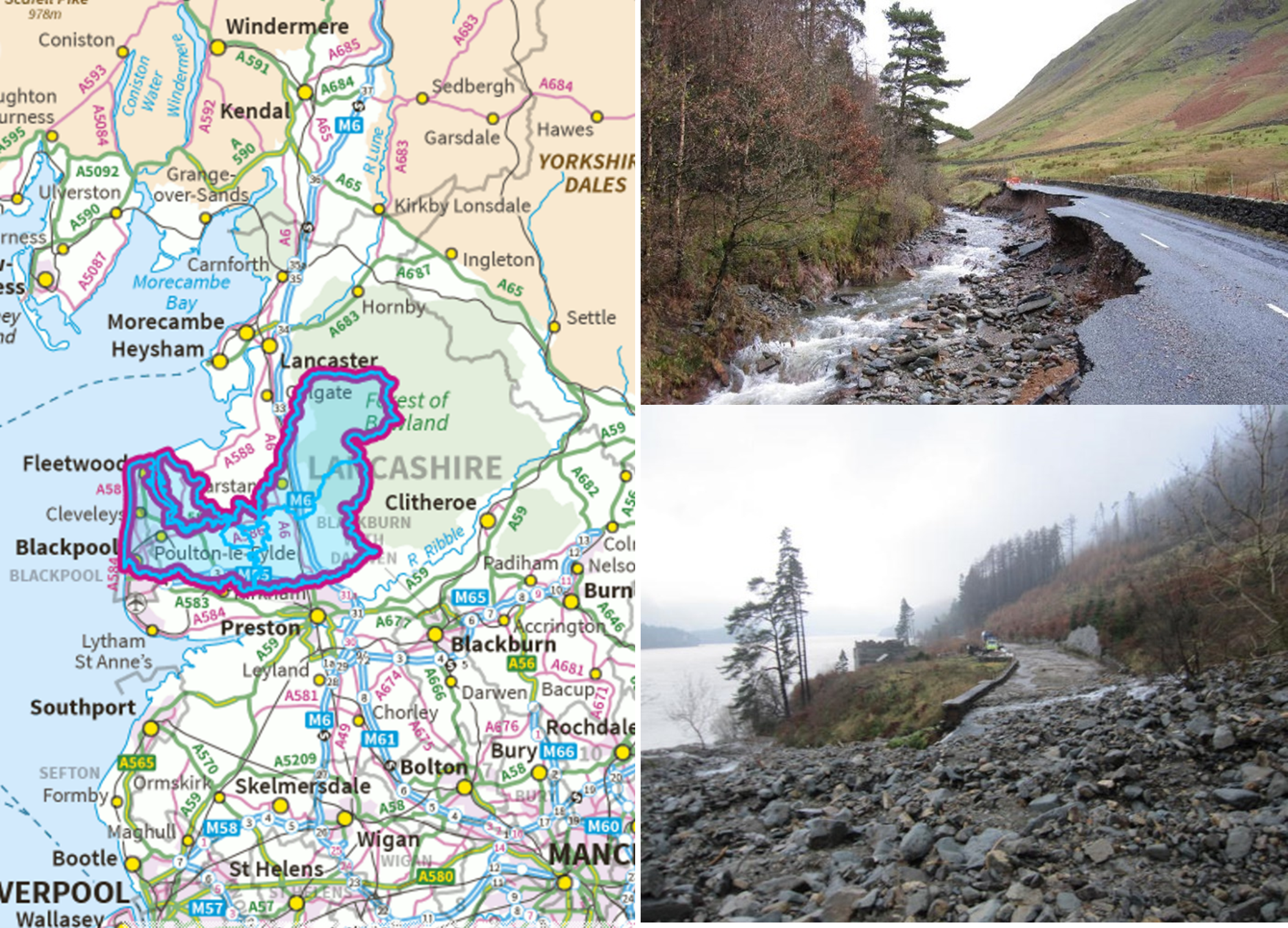
Among the areas most exposed is the Wyre Catchment in Lancashire. The catchment includes the village of Churchtown, which has experienced significant flooding on several occasions over the last 25 years, this recurrence rate has left residents struggling with repeated damage and disruption. The area also includes one of United Utilities’ pumping stations, which was damaged during storm Desmond. Although not originally the company’s highest operational priority, the combination of repeated community flooding and existing interest from local stakeholders made it a compelling site to demonstrate how public-private collaboration could drive effective investment in flood resilience in this landscape.
Figure 1: The Wyre Catchment Area (left) has experienced repeated flood events within the last 25 years. Two examples of the damages to road infrastructure caused by Storm Desmond can be seen on the right (top and bottom).
The Wyre Catchment Natural Flood Management (NFM) Project built on previous Environment Agency studies that had already explored NFM opportunities in the area. Using the agency’s Working with Natural Processes evidence directory, the project partners developed a coordinated strategy to test how interventions such as leaky barriers, woodland creation, and floodplain reconnection could reduce flood risks in this landscape. Hence, United Utilities, the Environment Agency, and local partners worked together to co-design natural flood management measures and develop a model for landscape-scale collaboration that protects communities, as well as commercial infrastructure.
Solution
The Wyre Catchment Natural Flood Management (NFM) Project began with a spatial analysis and prioritization process to determine where interventions would be most effective to reduce downstream flood peaks. To achieve this, United Utilities commissioned a GIS-based ecosystem services modelling firm to carry out a high-resolution analysis of the catchment (approximately 5×5-metre grid cells). Each pixel was assessed for its ecosystem service performance, including flood storage, carbon sequestration, erosion control, and nutrient retention.
Figure 2: The spatial analysis showed the landscapes current capacity to hold water (left) and identified the top 2% and of locations where interventions would have the greatest impact to reduce downstream flooding(right, some solutions are not visible due to scale).
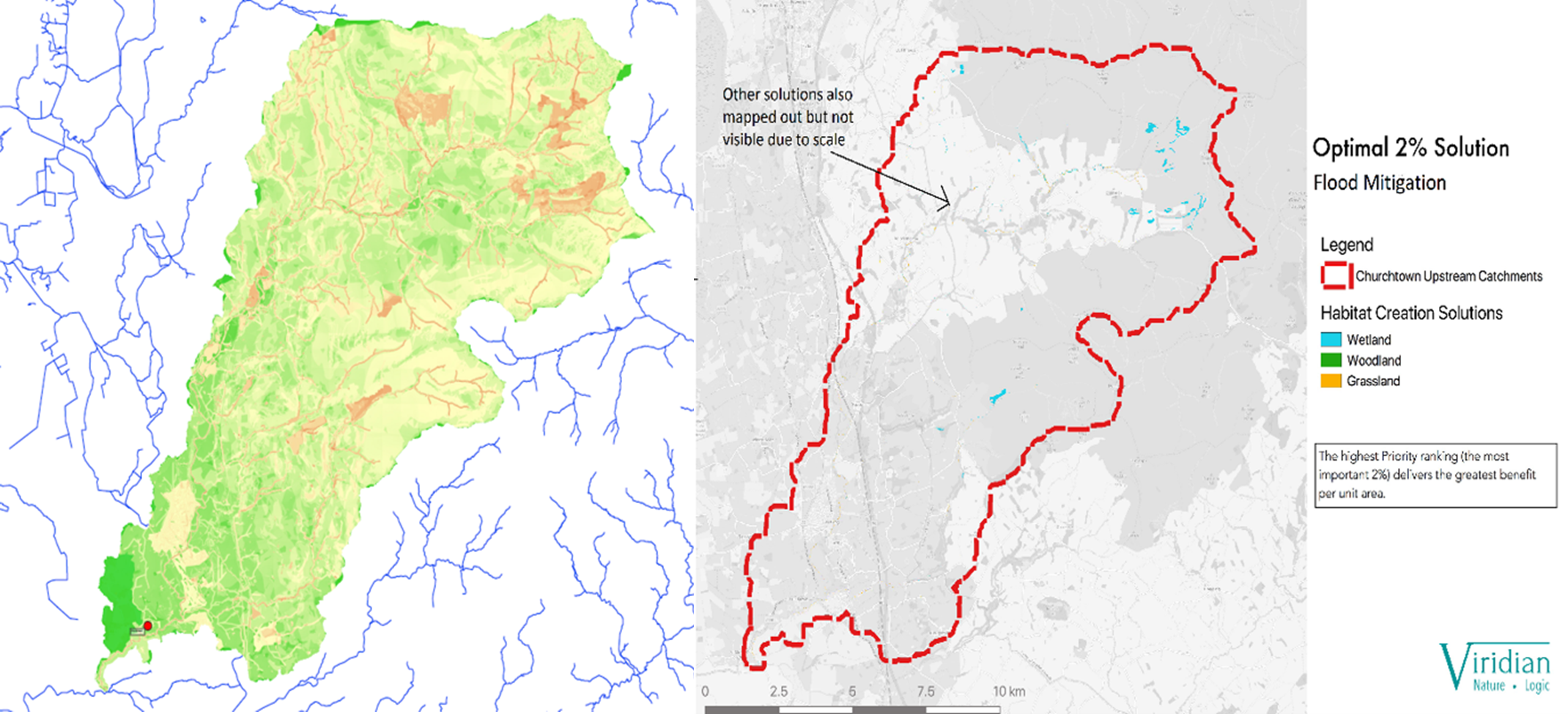
This analysis produced a ranked “opportunity map” highlighting the top 2% and the top 10% of locations where small-scale interventions could have the greatest cumulative impact in reducing flood risk in the Wyre Catchment area. Interestingly, both models (for 2% and 10%) had very similar results, showcasing that targeted interventions play a crucial role in reducing the risk of floods. Since the modelling demonstrated that strategically placing a network of different measures across the catchment could collectively deliver significant reductions in peak flows, these insights formed the foundation for the collaborative landscape management approach.
The implementation of the Wyre Catchment project centered on deploying a diverse network of natural flood management measures across the upper catchment to collectively slow and store water. The interventions included leaky dams constructed from timber and brash, ponds that temporarily retain excess runoff, as well as the creation of hedgerows and woodland to intercept rainfall and stabilize soils. In addition, peatland and grassland restoration activities helped to enhance infiltration, reduce peak flows, and increase the overall water-holding capacity of the landscape.
Figure 3: The Wyre Catchment project consists of peatland restoration (left), woodland creation (middle), leaky dams (right), and several other natural flood mitigation measures (Picture credits: Wyre Rivers Trust)
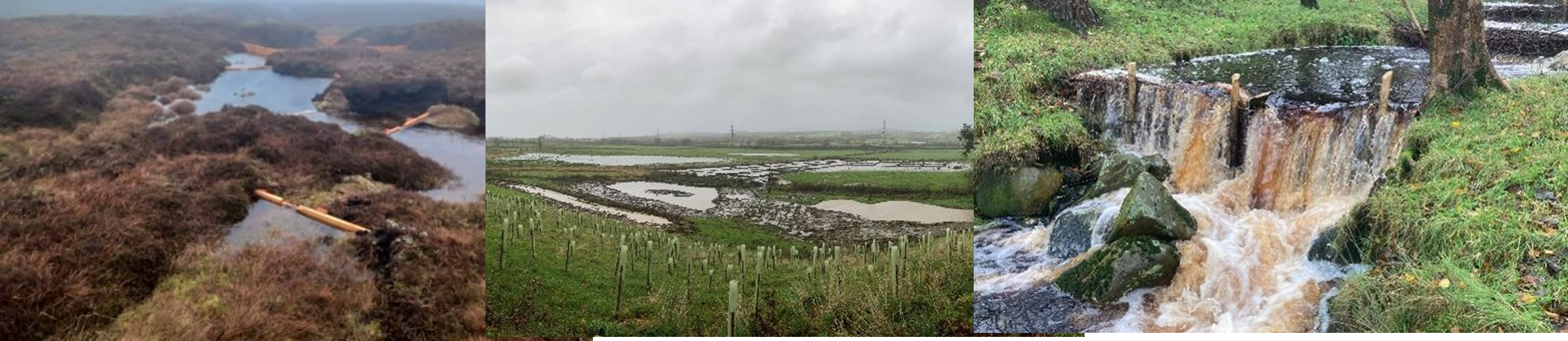
By strategically positioning many small-scale interventions where modelling showed the greatest potential for flow attenuation, the project created a holistic water management system that reduced downstream peak flows during heavy rainfall events. This distributed approach allowed the landscape to capture, hold, and gradually release water instead of allowing rapid runoff into rivers.
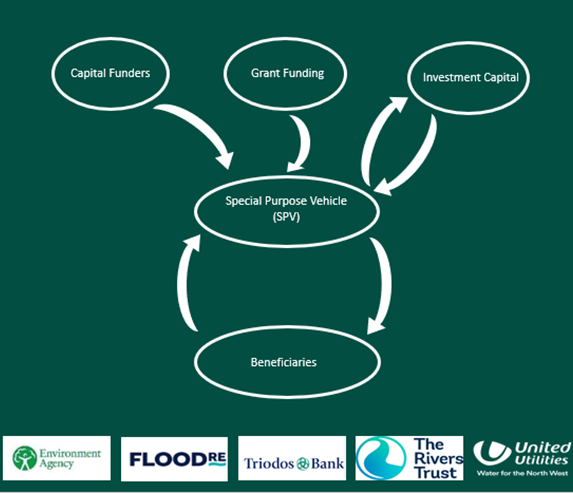
To turn the modelling results into tangible action, project partners established the Wyre Catchment Community Interest Company (CIC) — a Special Purpose Vehicle to coordinate delivery, manage contracts, and oversee performance. Early-stage development was supported by DEFRA’s Natural Environment Investment Readiness Fund and the Esmée Fairbairn Foundation, with The Rivers Trust providing technical expertise and facilitating stakeholder engagement (more on this in the ‘cost’ section).
Building on robust modelling, the team engaged key downstream beneficiaries such as United Utilities, the Environment Agency, FloodRE (a government flood reinsurance provider for high flood risk properties), the regional Flood and Coastal Committee, and local councils, to demonstrate the measurable potential to reduce flood risk. The project partners then secured long-term, outcome-based commitments that linked payments directly to verified performance. This approach established the foundation for a results-driven financing model, aligning public, private, and community stakeholders around shared objectives for flood resilience and environmental restoration.
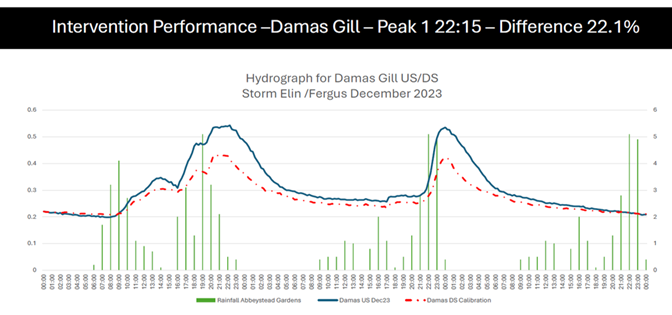
The implementation of this project was grounded in a collaborative, community-led approach. The Wyre Rivers Trust engaged more than 30 landowners to identify suitable sites, secure participation, and navigate complex land tenure arrangements (where needed). Governance was structured through a board that included representatives from buyers, investors, farmers, community members, and delivery partners, ensuring inclusivity and shared decision-making. Monitoring and verification were integrated from the outset. A network of upstream and downstream flow sensors was installed to track changes in water levels during storm events. Early results show that the interventions successfully reduced flood peaks and allowed rapid recovery of normal flows, confirming that the system has strong potential to handle future storm events effectively. Initial monitoring indicates that outcomes exceed the modelled expectations.
Impact
Sustainability impact
Climate impact
The Wyre natural flood management program delivers measurable climate resilience benefits by slowing runoff, increasing temporary water storage, and reducing the height and intensity of peak flows during heavy rainfall events. Initial modelling targeted a 15% reduction in peak flows for key storm events; early monitoring now indicates reductions of around 22%, demonstrating that strategically placed natural flood management measures can produce substantial resilience benefits (and provide increased resilience to around 56 properties in Churchtown). By lowering the frequency and severity of damaging floods, the interventions help avoid the carbon emissions typically associated with post-flood recovery, infrastructure repair, and reconstruction. Longer-term climate benefits stem from peatland restoration and new woodland creation, both of which enhance the landscape’s capacity to sequester and store carbon over time. Taken together, the project is expected to sequester around 25,000 tons of carbon over its lifetime. These combined benefits (reduced flood severity, avoided damages, and carbon sequestration) illustrate how coordinated NFM can support both adaptation and mitigation objectives simultaneously.
Nature impact
The landscape management measures implemented across the Wyre Catchment have improved the ecological function and quality of ecosystem services across the entire landscape. Restoring degraded land to create functioning wetlands, restored peat habitats, hedgerows, and new tree cover has strengthened habitat connectivity and increased biodiversity. Soil erosion has been reduced by stabilizing slopes and improving vegetative cover. More broadly, these interventions also enhance water quality by reducing sediment movement and helping retain nutrients before they reach downstream water bodies.
Beyond these nature benefits, the restoration activities improve habitat structure, support species recovery, and enhance the overall condition of the landscape. By supporting natural processes such as water retention, soil stabilization, and habitat connectivity, the project strengthens the ecological resilience of the Wyre Catchment and creates a more functional, diverse, and climate-resilient landscape.
Social impact
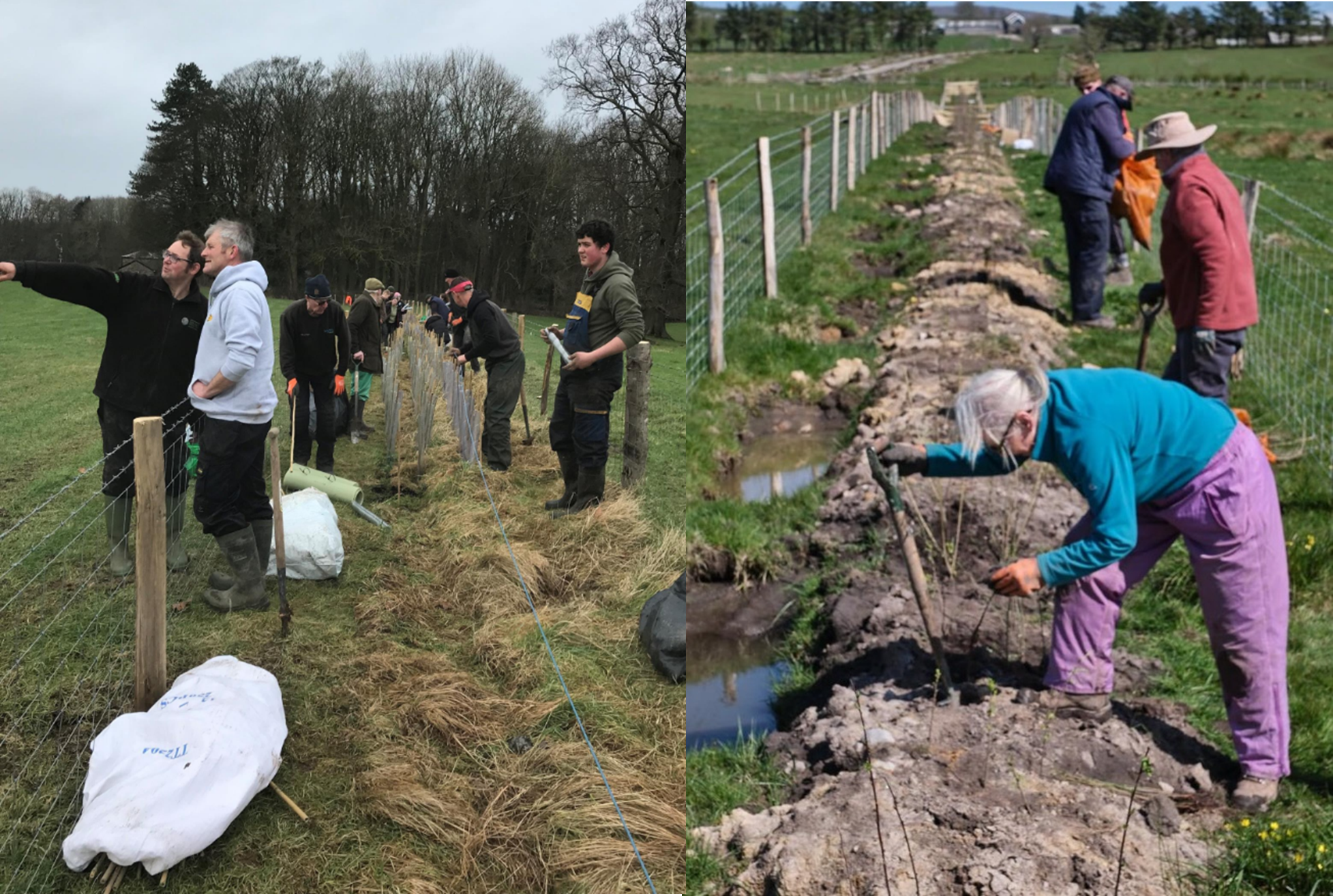
The project has delivered several social benefits alongside the inherent flood-risk reductions. Through volunteer engagement, residents and community groups became directly involved in the water-management activities across the catchment, which deepened their understanding of how to manage and maintain flood risks interventions in this landscape and ultimately strengthened community ownership of the interventions.
The program also provided direct financial support to local farmers. With the reduction of EU basic payment subsidies, many UK farm businesses have been searching for new income sources. By compensating farmers for the flood-risk reduction services they deliver, the project helps make farm enterprises more financially sustainable while recognizing the broader public benefits they generate.
Finally, the Wyre initiative demonstrates a new and collaborative funding model for catchment-scale action. No single beneficiary organization could have justified investing in this program alone. However, by pooling interests and aligning contributions through a shared mechanism, partners were able to fund interventions collectively, making the project viable and cost-effective. This cooperative structure is itself one of the program’s strongest social outcomes, setting a precedent for how multiple stakeholders can jointly invest in resilience and environmental improvements.
Figure 4: Residents, farmers and local community groups became directly involved in the water-management activities across the catchment area (Picture credits: Wyre Rivers Trust).
Business impact
Benefits
For United Utilities, the natural flood management (NFM) interventions provided tangible and quantifiable protection of critical assets. The company began by identifying the assets most exposed to recurring flood events and assessing their rebuild or repair costs. This was followed by detailed modelling to estimate the expected percentage of flood damage under various storm scenarios, including the additional risks posed by climate change. By combining these factors, the team calculated the likely cost of a major flood event and annualized that figure using climate-adjusted flood probabilities.
This analysis produced an estimated whole-life flood risk of roughly £10 million, forming the baseline against which the benefits of NFM could be assessed. When United Utilities modelled how the improved land management approach would slow and store water, their estimations showed a 5–15% reduction in flood exposure, translating into a benefits range of approximately £0.5–£1.5 million. The outcomes of this model enabled the partners to determine a specific payment structure within the outcome-based contract: an annual buyer contribution of around £50,000 per year over nine years. For United Utilities, this represented the portion of value they could credibly and responsibly attribute to reduced risk.
Beyond avoiding flood damage, the project helped reduce sewer loading, protect water abstraction points, and avoid costly post-flood repairs to treatment and distribution infrastructure. For investors, the project demonstrated how a network of small, distributed interventions could be aggregated into a single investable project.
Figure 5: Although initial estimations showed a 5–15% reduction in flood exposure, post-implementation modeling shows average peak flow reductions between 20-25% (Picture credits: Wyre Rivers Trust Post Delivery Monitoring Data)
Costs
The financial structure of the Wyre catchment project evolved through several stages, beginning with an initial development phase supported by DEFRA, the Environment Agency and Esmée Fairbairn Foundation grant funding. These early funds enabled the technical modelling, asset-level risk assessments, hydrological analysis, and co-design processes needed to demonstrate feasibility and derisk the initial investment.
Once United Utilities established the expected flood damages, annualized risk, whole-life exposure (c. £10 million), and benefit range (£0.5–£1.5 million) for their own operations, other project partners could determine outcome-based payment levels, anchoring investor returns to the ~£50 thousand per year buyer payment over a nine-year contract period. These financial data points are specific to United Utilities – other buyers did their own assessments and negotiated their own contracts. Still, for United Utilities, this contract became the basis for raising private capital to finance implementation. Project delivery costs included on-farm capital works (e.g., building leaky dams, channel re-profiling, planting, and soil management improvements); monitoring equipment to verify hydrological performance; delivery partner fees; and long-term landowner hosting and maintenance payments. Importantly, the project adopted a financing model that blends grants and private investment to reduce upfront risk and enable delivery of interventions across the catchment.
This blended approach not only ensured financial viability but also provided a replicable blueprint for scaling NFM: public funds support early modelling and plan development, while private capital finances implementation and is repaid over time through outcome-based contracts with beneficiaries. Overall, although the project required significant coordination and up-front technical work, its long-term financial logic is clear: relatively modest annual payments today help avoid far higher infrastructure losses in the future, while delivering broad co-benefits across the entire landscape.
Figure 6: The financing model included the creation of a special purpose vehicle (SPV) to manage funding across the different stakeholders.
Impact beyond sustainability and business
Potential side-effects
Key Challenges included:
-
Negotiating contracts where complex land ownership and tenancy arrangements affected consent and payment flows.
-
Addressing reluctance among some farmers toward interventions like ponds and floodplain reconnection due to perceived loss of productive land.
-
Scaling beyond a single catchment, as the model requires a sufficiently large beneficiary base to remain attractive to investors.
Despite progress, engaging insurance companies more directly remains a key ambition to expand the buyer base and improve scalability.
Implementation
Typical business profile
The approach showcased in this case study is particularly applicable for utilities (water companies), local authorities, transport and energy infrastructure operators, and insurers, especially where assets and communities share downstream flood exposure. Agricultural landowners also benefit when hosting payments and capital works to enhance farm resilience and diversify revenues.
Approach
-
Wyre NFM Project – Design a menu of NFM measures: Select context-specific interventions such as leaky dams, ponds, hedgerows, peat and woodland restoration, grassland management, and targeted grazing.
-
Wyre NFM Project – Establish a delivery vehicle: Create a community interest company or SPV to aggregate contracts, standardize delivery, and manage financial flows.
-
Wyre NFM Project – Secure blended early-stage funding: Use public grants and philanthropic support to underwrite modelling, project design, and early coordination.
-
Wyre NFM Project – Negotiate multi-year buyer contracts: Agree outcome-linked payments with flood-risk beneficiaries based on verified reductions in exposure and monitored performance.
-
United Utilities – Identify high-risk assets: Map the infrastructure most exposed to recurring flood events and assess associated rebuild or repair costs.
-
United Utilities – Quantify baseline risk: Model expected flood damage percentages under multiple storm scenarios (including climate-adjusted probabilities) to calculate likely event costs, annualized flood risk, and whole-life exposure (≈£10m).
-
United Utilities – Estimate intervention benefits: Model how NFM measures would slow and store water, generating a benefits range (≈£0.5–£1.5m) and informing a credible buyer payment level (≈£50k per year over nine years).
-
-
Wyre NFM Project – Attract impact investors: Raise capital for on-farm works, with repayment tied to contracted buyer streams and performance adjustments over the 9-year term.
-
Wyre NFM Project – Implement distributed interventions at scale: Work with local delivery partners; compensate landowners for capital works and long-term hosting/maintenance.
-
Wyre NFM Project – Monitor hydrological performance: Track upstream and downstream flows to validate outcomes, inform adaptive management, and adjust payments if required.
Stakeholders involved
-
United Utilities: buyer, delivery lead, landowner; conducted asset-risk analysis and made outcome-based payments.
-
The Rivers Trust: Project delivery in inital scoping stage and formed the Special Purpose Vehicle / Community Interest Company
-
Wyre Rivers Trust: local delivery partner responsible for landowner engagement and on-farm implementation.
-
Environment Agency, FloodRe, Regional Flood & Coastal Committee, and local councils: beneficiary partners supporting planning, co-funding, and strategic alignment across the catchment.
-
DEFRA and Esmée Fairbairn Foundation: provided early-stage grant funding for project development, modelling, and pilot design.
-
Community Interest Company (CIC/SPV): established to aggregate interventions, contracts, and financial flows across multiple parties.
-
The Woodland Trust: Grant funder for delivery of the woodland creation elements of the project
-
Farmers and landowners: hosted interventions, carried out maintenance, and held representation within governance structures.
-
Impact investors: financed capital works with repayment linked to contracted buyer streams and monitored performance.
-
Re-insurance and innovation partners (e.g., FloodRe): contributed data and risk-modelling insights to explore future risk-transfer solutions.
Key parameters to consider
Successful implementation depended on several enabling conditions, including local land ownership and tenancy arrangements that allowed interventions to be hosted and maintained over time. Securing landowner willingness was particularly important for measures such as ponds or floodplain reconnection, which can be perceived as reducing productive land. The project also required robust hydrological and ecosystem modelling to validate expected outcomes, supported by an independent monitoring framework to ensure credibility for investors and beneficiaries. Equally critical was having a sufficiently broad pool of downstream beneficiaries to create a viable buyer payment stream and attract private capital. Early public or philanthropic funding played a pivotal role by underwriting modelling and development costs, significantly reducing project risk and enabling investment at later stages.
Implementation and operations tips
The project demonstrated that effectiveness can be significantly enhanced by using fine-scale spatial prioritization to identify the highest-impact locations, ensuring that resources are directed to areas delivering the greatest marginal benefit. Outcome-based contracts were designed to link payments to monitored performance, with shared-risk mechanisms to align incentives between buyers and investors. Delivery relied on trusted local partners who were able to engage landowners and navigate complex tenancy structures, ensuring smooth implementation. Instead of relying on large, singular interventions, the approach combined many small, distributed measures into a connected network, increasing resilience through redundancy and cumulative impact.
Generally, based on guidance and experience from leading organizations such as the International Union for Conservation of Nature (IUCN), the World Resources Institute (WRI), and Arcadis, several critical success factors have been identified for corporate implementation of NbS:
-
Address a business challenge directly: NbS must be framed as part of a company’s business solutions toolkit to drive investment and adoption. For example, NbS designed for heatwaves can deliver measurable resilience benefits to the implementing business, as illustrated in this case study.
-
Deliver multiple benefits: NbS inherently provide biodiversity gains while contributing to climate mitigation and offering societal benefits. With limited sustainability budgets, prioritizing projects that deliver multiple outcomes increases their attractiveness to companies.
-
Implement at a landscape level: Deploying NbS across a landscape maximizes their effectiveness and cost efficiency, enabling collective resilience that protects multiple stakeholders from natural hazards. Therefore, upscaling NbS is crucial.
-
Accurately value benefits: Proper valuation should capture avoided losses, operational savings, and enhanced asset value, which strengthens the case for private investment and ensures long-term maintenance and sustainability.
-
Leverage technical and local expertise: Successful NbS implementation depends on technical know-how, thorough planning, and understanding of local environmental conditions. Working in a multistakeholder, landscape-level context requires strong project management, stakeholder coordination, and potentially support from funding partners to overcome long lead times and landscape-specific challenges.
By focusing on these success factors and integrating monitoring, cost-effective resource use, and holistic benefits evaluation, companies can overcome implementation challenges, drive adoption at scale, and ensure the long-term operational success of Nature-based Solutions.
Going further
Sources
External links
https://www.wbcsd.org/resources/nature-based-solutions-blueprint/
https://www.wbcsd.org/resources/the-business-leaders-guide-to-climate-adaptation-resilience/
https://www.wbcsd.org/resources/getting-ahead-of-physical-risk/
https://www.theclimatedrive.org/action-library/adapt-to-storm-risks-with-nature-based-solutions