

Context
This case study is part of decarbonization best practices shared through Bayer’s Procurement Igniting Networks Award 2025. Discover more about how Procurement collaborates with Bayer’s Suppliers and the Igniting Networks philosophy here.
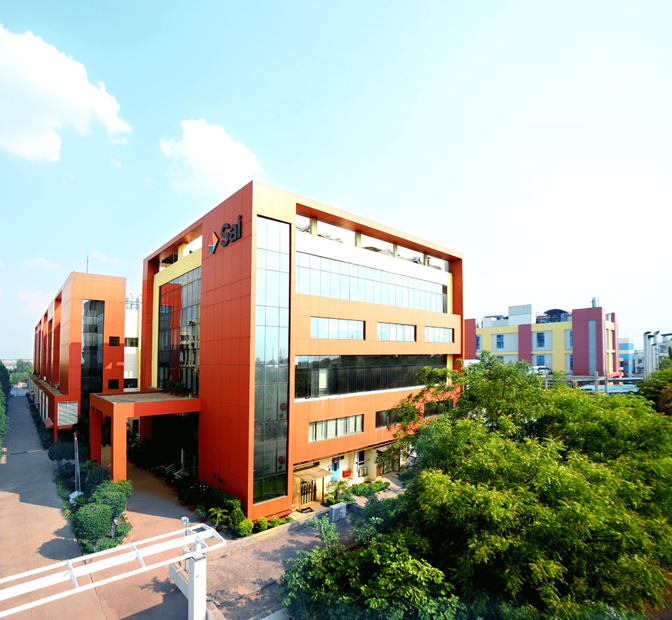
Sai Life Sciences is a contract research, development & manufacturing organization (CRDMO) that supports global innovator companies with services along the drug discovery, development and commercialization journey. The company’s flagship manufacturing site supplies large volumes of intermediates and Active Pharmaceutical Ingredients (APIs) to various highly regulated markets including USA, UK, EU and Japan. The processes and scale of manufacturing involved are inherently energy-intensive, leading to high electricity consumption and associated Scope 2 emissions. The company identified its dependence on fossil-based grid power as a key barrier to achieving its Science-Based Targets initiative (SBTi) commitments and long-term net-zero goals. In FY23, Sai Life Sciences launched a renewable energy transition strategy focused on reducing Scope 2 emissions through a hybrid solar and wind group captive model. The initiative was designed to pilot a decarbonization pathway at its flagship manufacturing site, optimizing cost efficiency, risk resilience, and scalability across other operations. The initiative is at the company’s manufacturing site located in Bidar, Karnataka, India.
Figure 1: Sai Life Sciences’ Manufacturing Facility located in Bidar, India
Solution
To reduce emissions from oral excipient manufacturing, Evonik introduced a multi-pronged approach combining renewable energy sourcing, greener feedstocks, waste reduction, and digital carbon management systems.
All European production sites have transitioned to 100% renewable electricity, cutting Scope 2 emissions to near zero. The company is progressively qualifying low-carbon raw materials and working with suppliers to reduce Scope 3 Category 1 emissions. Continuous process optimization and waste reduction initiatives are underway, targeting a 10% decrease in waste generation by 2030 while maintaining pharmaceutical-grade quality under cGMP.
To enhance transparency and enable long-term reductions, Evonik is automating Life Cycle Assessments (LCAs) across production lines. This digital system provides reliable emissions tracking and identifies hotspots for future process improvements.
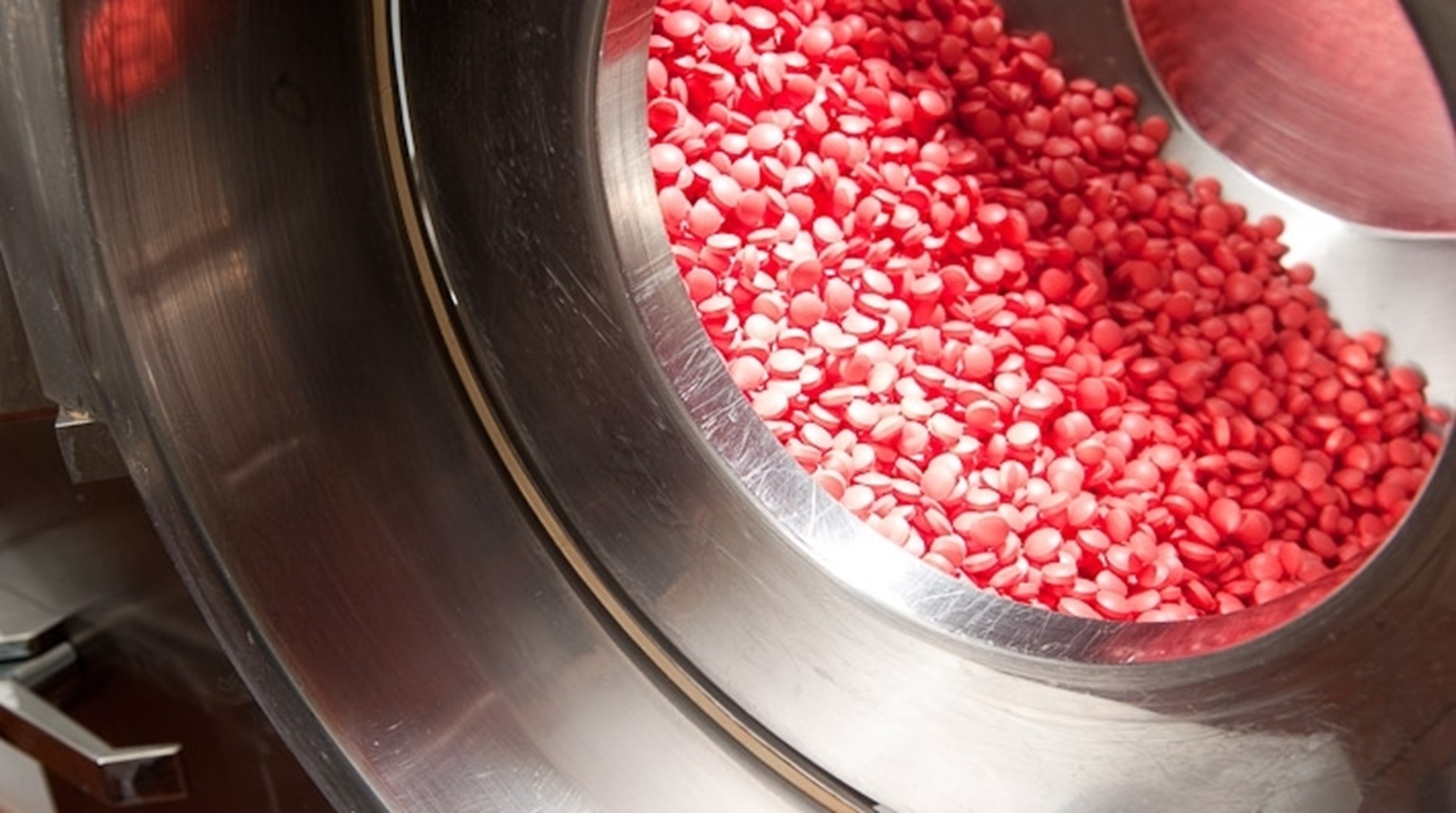
Figure 1: Tablet coating process using EUDRAGIT® polymer produced at the Evonik Darmstadt site in Germany.
Impact
Sustainability impact
Climate
The initiative targets Scope 1 and Scope 2 emissions through renewable electricity and process efficiency improvements, and Scope 3 Category 1 emissions via greener feedstocks. Evonik’s European excipient operations now use 100% green electricity. Process improvements and lower-emission raw materials are expected to contribute to an 11% reduction in Scope 3 emissions by 2030, supporting the company’s goal of climate neutrality by 2050. Backward integration has already reduced emissions of 90kg CO2e/kg product.
Nature
Reduces fossil dependency and supports circular feedstocks, reducing negative impacts on ecosystems and resources.
Social
Ensures security of supply of functional polymers as excipients e.g. EUDRAGIT®, safeguarding patient access and compliance while fostering decarbonization.
Business impact
Benefits
The initiative enhances the competitiveness of Evonik’s oral excipient portfolio by combining environmental performance with regulatory compliance, helping secure customer trust and long-term supply contracts.
Costs
Double-digit million EUR, including a new backward-integrated spray drying facility. Green energy dependent on bio-mass availability.
Implementation
Typical business profile
Relevant for chemical and pharmaceutical manufacturers operating under regulated environments (e.g., cGMP) aiming to decarbonize energy-intensive production processes while maintaining strict product quality standards.
Approach
-
Assess emissions hotspots (completed)
-
Switch to green electricity (completed)
-
Qualify greener raw-materials (ongoing)
-
Reduce waste (ongoing)
-
Implement automated Life Cycle Assessment (ongoing)
-
Monitor and report progress
-
Improve transparence on GHG emissions
Stakeholders involved
Project involves research & development, sustainability, production, procurement, quality and regulatory.
Key parameters to consider
It envisions implementation of well established practices, but overall more challenging for cGMP and regulatory environments.
Implementation and operations tips
-
Supplier engagement needs to be improved.
-
Regulatory constraints play a big role in implementing new processes /raw materials.