

Context
Submitted through the COP31 Sustainable Transformation Awards · SKD Türkiye (WBCSD Global Network Partner)
Boyner Group is a retail group in Türkiye with seven brands, 350 department stores, nearly 7,000 employees, and the sustainability function reporting directly to the Board level.
Women are under-represented in the sustainability profession, and young women preparing to enter it have limited access to structured training, mentoring and practical experience. Before the programme, that access depended largely on which university a student attended and which city she lived in, so the talent pool available to employers was narrower than the pool of interested candidates.
SheLAB was launched in 2025 with UNDP Türkiye to address that gap directly, by building a national route into sustainability careers for young women rather than recruiting from the small group that already had one.
The baseline year is 2025, the first implementation year. Performance has been tracked continuously since then through application records, education attendance systems, feedback surveys and Net Promoter Score analysis.
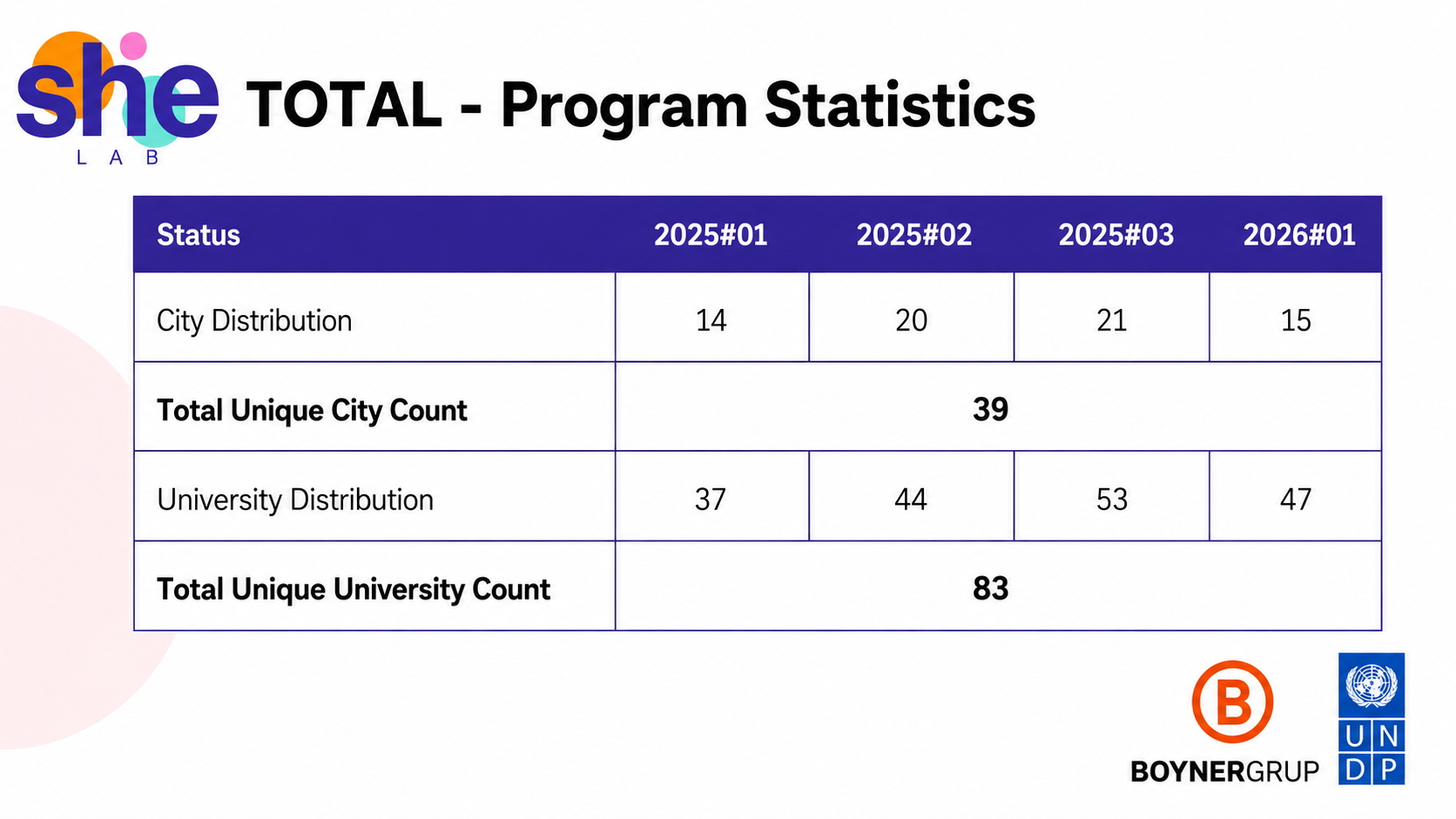
Location of the initiative: Türkiye — participants drawn from 39 cities and 83 universities
Solution
SheLAB is a hybrid capacity development programme that combines sustainability content with leadership development and a route into practice.
Recruitment is national and open. Applications are taken from any city and any university, and participants are then selected into cohorts, which is what allows the programme to reach students outside the largest cities and best-known institutions.
The curriculum covers sustainability, systems thinking, project development and personal development, delivered through hybrid platforms so that geography and travel cost do not determine access.
Four support mechanisms sit around the training: mentoring by the group's executives, project development work, internship opportunities, and SheTalks public events that give participants visibility and connect them to practitioners in the field.
The division of labour between the partners is explicit. UNDP Türkiye shapes the educational content, the sustainability modules and the development programme; the company handles strategic coordination, communication management, the mentoring process and participant experience. That combination puts development expertise behind the content and corporate delivery capability behind the operation.
What distinguishes the design is that sustainability is taught through a gender equality and inclusive leadership lens rather than as a purely technical subject. The objective is not only professional competence but the participants' capacity to take an active role in social transformation, which is why mentoring, public speaking and project work carry as much weight as the modules themselves.
Figure 1: Participants, mentors and programme partners at a SheTalks event bringing the SheLAB community together
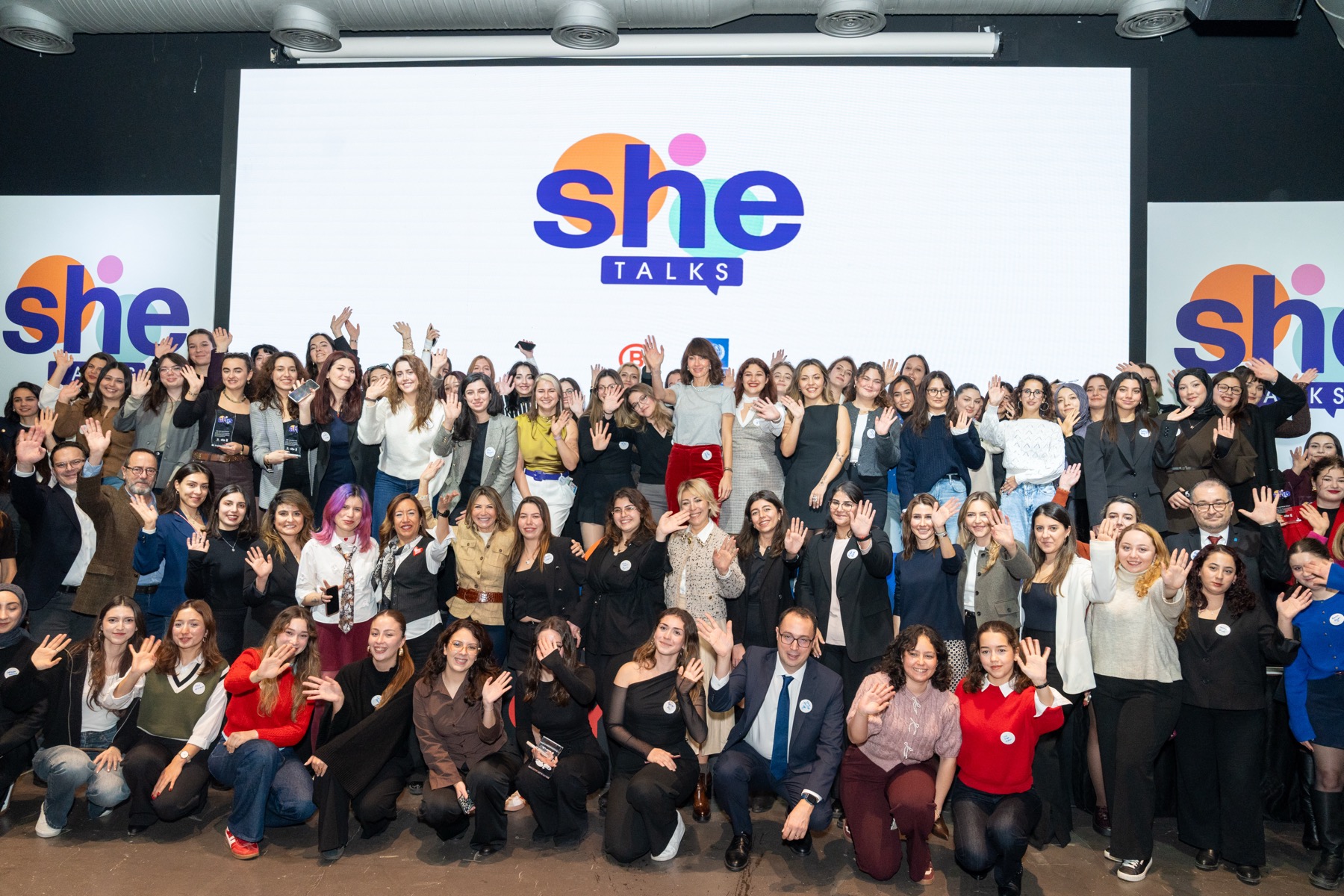
Figure 2: Programme statistics across the first four cohorts: participants drawn from 39 cities and 83 universities in Türkiye
Impact
Sustainability Impact
Climate
The programme does not reduce emissions in the company's own operations, and no figure is reported for it against Scope 1, Scope 2 or Scope 3. Its climate contribution is an enabling one, exercised through the people it trains and the decisions those people go on to take.
The enabling mechanism has three parts. The curriculum covers sustainability and systems thinking, so 291 participants across four cohorts since the 2025 baseline year enter the profession in which corporate emissions decisions are actually made, with the mentoring, project work and internship routes attached to it as the bridge into those roles. Executive mentoring runs the same effect in the other direction: managers who mentor have to articulate how sustainability decisions are taken inside the group, which spreads sustainability literacy through line management. Public reach extends it beyond the participant group, with the project film passing 2.3 million views and national media coverage carrying the subject further.
The programme is designed to equip young women to integrate sustainability principles into their future professional roles, regardless of their professionality. Participants who choose to pursue careers in sustainability may also move into positions that include responsibility for greenhouse gas emissions, climate performance and related environmental outcomes. However, as the majority of the participants are still in education, it is too early to provide robust evidence on post-programme employment outcomes or on the extent to which participants have entered roles with direct emissions responsibility. As the programme progresses, follow-up tracking will be used to monitor how many participants move into sustainability-related roles and career paths.
Social
Reach was the first result. More than 6,000 applications were received, and in the first year they came from 42 universities and 28 cities, with 209 young women admitted. Across the programme to date, applications have come from 83 universities and 39 cities in Türkiye, and 291 participants have been taken through four cohorts (1).
Engagement was the second. 72 per cent of participants attended the training sessions regularly and interacted actively, which on a voluntary hybrid programme run alongside university study is the harder measure to hold.
Satisfaction and advocacy were the third. Overall satisfaction reached 99 per cent at the end of the programme, and the Net Promoter Score was measured at 61, which the company reads as six out of every ten participants recommending the programme to people around them.
Public reach was the fourth. The project film passed 2.3 million views, and the programme was covered by national media including Hürriyet, Cumhuriyet, Posta and Oksijen, which carried the subject of women's leadership in sustainability well beyond the participant group.
Before the programme, structured training and mentoring in sustainability were largely out of reach for young women outside a few institutions; afterwards a national access network exists. The qualitative result reported by the company is a change in participants' knowledge, confidence and leadership capacity, which the quantitative indicators support but do not by themselves demonstrate. According to the SheLAB Alumni Information Survey, 77% of the 30 respondents (23 participants) are currently active in employment, internships, or education. In addition, 10 alumni reported that they are either continuing their graduation projects or planning to do so. The findings also indicate that the programme’s leadership impact extends beyond participant satisfaction: 97% of alumni reported that SheLAB contributed to their leadership skills, while 83% (25 participants) stated that they had taken on more visible, active, or leadership roles following the programme.
Business Impact
Benefits
The company gains early sight of a national pool of sustainability talent that its own recruitment channels would not reach, and the internship route converts part of that pool into a direct hiring pipeline.
Mentoring builds capability inside the company as well. Executives who mentor participants have to articulate how sustainability decisions are actually made, which sharpens internal practice and spreads sustainability literacy through line management.
Visibility is substantial relative to the spend. The project film passed 2.3 million views and the programme was covered by four national titles, reaching prospective employees and customers at the same time.
The partnership with UNDP Türkiye gives the work external legitimacy and a measurement discipline that a corporate programme designed alone would lack, and it connects the company to a development network beyond its own sector.
Costs
Financial and operational resources are supplied by the company. Educational content, mentoring processes, communication activity and event organisation, including the SheTalks events, are carried on corporate resources.
Executive mentoring time is the least visible and most constrained cost. It does not appear in a budget line, but it is what limits how many participants can be taken without weakening the experience.
The company names sustainable financing as a principal risk. The programme depends on a single corporate sponsor, and a change in that commitment would affect delivery directly.
Costs are contained by hybrid delivery, which removes travel and venue costs for most of the curriculum, and by the division of labour with the development agency, which supplies content development the company would otherwise have to buy. The total programme cost is approximately TRY 12 million.
Impact Beyond Sustainability And Business
Co-benefits
The programme builds a bridge between business and universities. Mentoring relationships with the group's executives and internship opportunities give participants direct contact with the working environment they are preparing for, and give the company contact with the generation entering the field.
SheTalks events and national media coverage raised public awareness of sustainability and gender equality together rather than treating them as separate agendas.
Because the content, mentoring and project development modules are modular, the structure can be adapted by other sectors and institutions without being rebuilt, and the public and private partnership model behind it is reproducible.
Potential side-effects
Dependence on one corporate funder is the clearest exposure. The company identifies sustainable financing as a risk area, and a programme that reaches this scale on a single sponsor is fragile in a downturn.
Participant diversity is harder to protect as the programme becomes better known. Selecting from more than 6,000 applications can drift towards candidates who are already well prepared, which would narrow exactly the access gap the programme exists to close; the company lists diversity of participants as a risk area for this reason.
Mentoring capacity does not scale with the platform. Hybrid delivery makes training cheap to extend, but mentoring and project supervision depend on individual availability, so growth in cohort size can dilute the part participants value most.
The indicator set measures experience rather than outcome. Attendance, satisfaction and Net Promoter Score describe how the programme was received; they do not show whether participants went on to sustainability roles.
Implementation
Typical Business Profile
The model suits companies with a recognised consumer brand and an established sustainability function, where the brand can attract applications at national scale and the function can supply credible mentors and real project work.
It is most relevant for organisations facing a shortage of sustainability skills in their own recruitment market and willing to invest ahead of hiring, since the return arrives as a talent pool rather than as an immediate placement.
A development agency or academic partner is close to essential, because the educational content, the measurement discipline and the external legitimacy come from that side of the partnership.
Delivery engages corporate communications, sustainability, human resources and senior executives acting as mentors, with board-level sponsorship providing visibility.
Approach
-
Name the access gap before designing the curriculum: Establish where the shortage actually sits — here young women's access to structured sustainability training, mentoring and practice — so that the programme is built around an access problem rather than around content that happens to be available.
-
Partner with a development organisation for content authority: Give the partner responsibility for the educational content, the sustainability modules and the development programme, and keep coordination, communication and participant experience on the company side, so each party contributes what it does best rather than duplicating the other.
-
Recruit nationally and openly: Take applications from any city and any university, publicise them through national channels, and select cohorts from the resulting pool, because open reach is what breaks the dependence on a small number of institutions.
-
Deliver in hybrid form: Run the curriculum through online and in-person components so that a participant's location and financial means do not determine whether she can attend, and use the in-person elements for the parts that need presence.
-
Attach mentoring, projects and internships to the training: Pair participants with company executives, require project development work, and offer internships, so that the programme produces experience rather than attendance certificates.
-
Give participants a public platform: Run open events at which participants meet practitioners and speak in public, and support the programme with a communications campaign, because visibility is part of what a leadership programme has to provide.
-
Instrument the programme from the first cohort: Collect application records, attendance data, satisfaction surveys and Net Promoter Score from the outset, set the first year as the baseline, and report participant data, impact results and communication outputs to senior management on a fixed cycle.
-
Feed each cohort's feedback into the next: Use attendance rates, satisfaction surveys and open feedback to revise content and delivery between cycles, and place the programme in the corporate sustainability report so that it is held to the same disclosure standard as other commitments.
Stakeholders Involved
-
Project leads: A member of the board of directors acts as the programme's public sponsor, taking part in the SheTalks events and giving the work visibility and standing inside the group, which signals that it is a long-term investment rather than an operational project. Progress, participant data, impact results and communication outputs are reported regularly to senior management, so performance is measured and development areas are reviewed systematically. Coordination is run by the group's corporate communications team in collaboration with Sustainability team, with processes managed jointly with the development agency partner.
-
Company functions: Corporate communications department coordinates delivery and manages the campaign; the sustainability department supplies subject content and project supervision; human resources handles the internship route; and executives from across the group act as mentors, which places the programme's core resource in line management rather than in a project office. The programme is reported within the group's sustainability report and runs as part of its wider ESG approach.
-
Main providers: UNDP Türkiye is the co-developing partner. It shapes the educational content, the sustainability modules and the development programme, and brings development and sustainability expertise together with an established measurement discipline. The company retains strategic coordination, communication management, the mentoring process and participant experience, so responsibilities are divided explicitly rather than shared loosely.
-
Other: Universities across Türkiye supply the applicant base — 83 institutions in 39 cities to date. Participants are positioned as stakeholders in the programme's development rather than as an audience: attendance rates, satisfaction surveys and feedback processes are tracked in every cycle and the results are used to develop content and delivery for the following one. National media coverage and the project film extended reach beyond participants to the wider public.
Key Parameters To Consider
The baseline year is 2025, the programme's first implementation year, and the data covers three training cycles run during that year, reported through hybrid education platforms, surveys and communication reports.
Five indicators are tracked: 1. application and reach volume; 2. participant attendance rate; 3. participant satisfaction rate; 4. Net Promoter Score; 5. media and digital reach performance.
Delivery is hybrid, which is what makes national reach affordable — the marginal cost of admitting a participant from a distant city is close to zero, while mentoring and project supervision remain the real capacity limit.
Funding and operational resources come from the company, while the development agency partner contributes development and sustainability expertise. The programme is included in the group's sustainability report and advances in an integrated way with its ESG approach.
Implementation And Operations Tips
Open recruitment is what produces reach. Applications from 83 universities and 39 cities came from publicising nationally rather than working through a shortlist of institutions.
Attendance is a more honest indicator than satisfaction. A 72 per cent regular attendance rate on a voluntary programme says more about relevance than a 99 per cent satisfaction score recorded at the close.
Mentoring is the binding constraint, so plan cohort size around mentor availability rather than around platform capacity.
Hybrid delivery is what makes national access affordable, but the in-person elements — public events, mentoring, project work — are what participants report as the differentiating part, so protect them when costs are reviewed.
Put a senior sponsor in front of the programme. Visible board-level participation in public events signals that the commitment is long term and makes it considerably easier to secure executives' mentoring time.